Why Does 90s Boom Bap Sound So Fat? The SP-1200 & S950 Legend
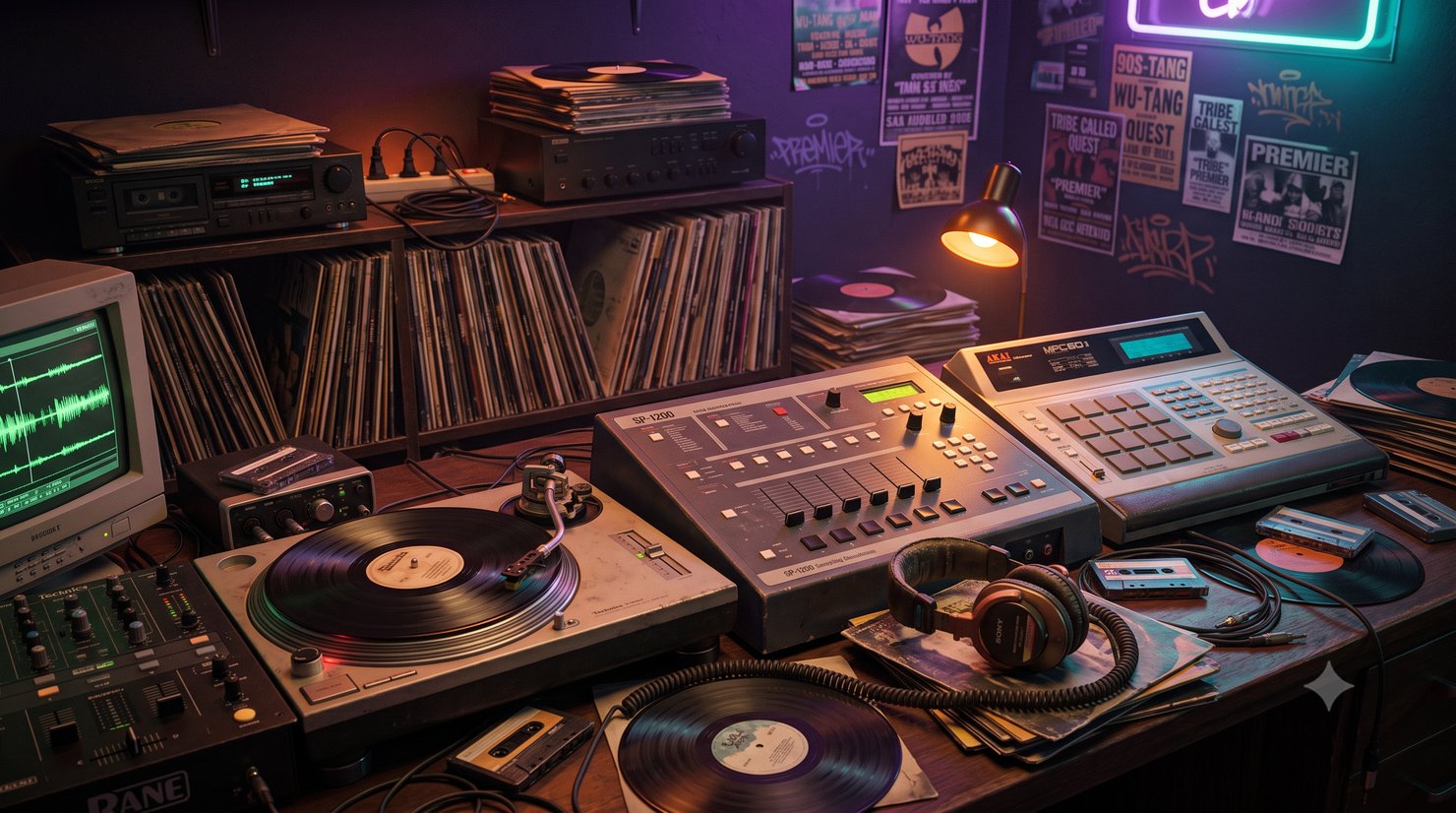
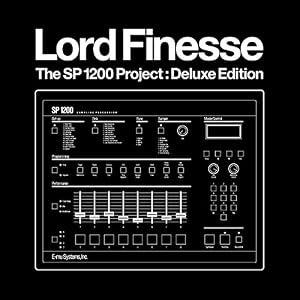
I love hip-hop. Pete Rock and Lord Finesse especially. That distinctive fat 90s tone — that unmistakably Boom Bap sound — is just so cool.
Lord Finesse, Pete Rock, The Beatnuts, Large Professor… I still get pulled in just listening to the loops. That slightly muffled, dark sound is the best.
"How do you even get that sound?"
If you love Boom Bap, you've probably wondered that at least once. The truth is, that gritty texture and fat low end has a lot to do with the samplers producers used back then. Today I'll dig into the secret a little, and at the end I'll share the plugins I actually use.
You can't talk Boom Bap without the SP-1200
The sampler that defines 90s hip-hop is the E-MU SP-1200.
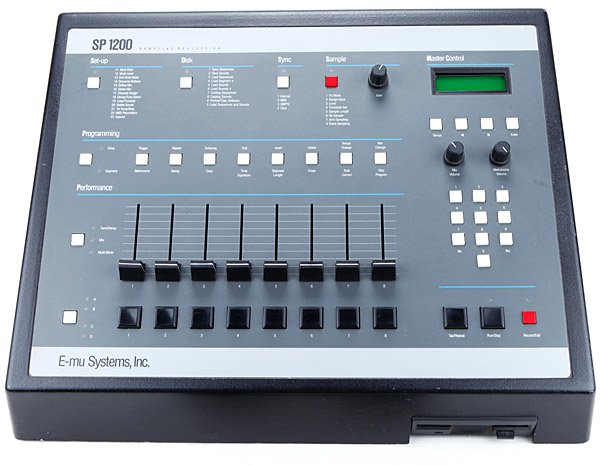
In hip-hop, producers have long used "sampling" — recording a piece of an old record and chopping it into something new.
These days a PC lets you record for hours and you barely think about storage. Back then it was totally different.
The SP-1200 could record only about 10 seconds in mono.
"Wait, that's it?" — right? And yet, within that tiny 10-second limit, countless classics were made.
The technique born from short sampling time
With only 10 seconds, you can't record a long loop as-is. So producers leaned on one trick:
Play the record at 45rpm, record it, then pitch it back down.
Recording at 45rpm lets you capture a longer phrase in the same 10 seconds. Then you pitch it down to the original tempo, and now you've got a usable, longer loop. Today a DAW or plugin does this in a click, but back then it was a clever way to stretch the limited sampling time.
What that gritty sound really is
The SP-1200 isn't loved just because it's old.
It samples at 12-bit / ~26kHz — a lower resolution than modern samplers and DAWs. Recent MPCs and DAWs usually run 24-bit / 44.1 or 48kHz, so by comparison the SP-1200 is pretty rough.
But that "roughness" is exactly the SP-1200's biggest charm.
And when you pitch down a sample you recorded at 45rpm, the highs get a little rounder and the lows gain a unique thickness. That's how you get that gritty, slightly muffled, fat Boom Bap sound.
It's less "old gear so it sounds worse" and more "the limitations themselves created a one-of-a-kind sound."
But the SP-1200 alone wasn't enough
Still, ~10 seconds of sampling time has its limits.
"I want a slightly longer loop." "I want to edit samples in more detail."
For that, many producers paired it with another machine: the AKAI S950.
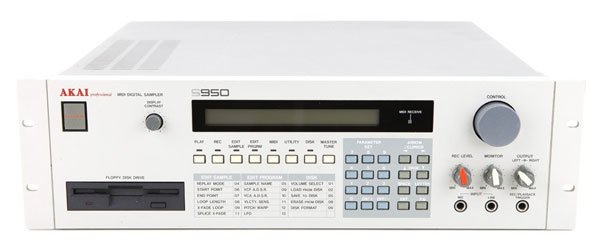
The S950 is also a 12-bit sampler, but these two weren't really rivals — more like they covered each other's weaknesses.
The SP-1200's main weakness is sampling time. ~10 seconds is fine for drums, but tight for long loops or melodies.
That's where the S950 shone. It offers longer sampling time, plus detailed sample trimming and loop editing.
It also has an analog VCF/VCA, giving it that warm, characterful filter sound. And that filter feels so good…
Of course, "the sound" wasn't made by the SP-1200 alone. The SP-1200's texture plus the S950's editing and filter — together, those two made that fat 90s Boom Bap sound.
How were the SP-1200 and S950 used together?
The S950 is a rackmount sampler with no sequencer. So many producers connected it to the SP-1200 via MIDI and played the S950 from the SP-1200. Picture it like this:
↓
Sample & edit on the S950
↓ MIDI
Play pads / sequence on the SP-1200
↓
Mixer
For example: drums on the SP-1200, longer loops on the S950, bass on the S950. Splitting roles like this let them work efficiently within limited sampling time. That's why people still call the SP-1200 + S950 a "golden combo."
Of course, not every producer used this exact setup. Some made classics on the SP-1200 alone; others ran an MPC as their main. But when you dig into the studios of 90s Boom Bap greats like Lord Finesse and Pete Rock, the S950 comes up a lot — and it makes you go, "ah, so that's how that sound was made."
So you decide to buy the real thing…
"Then just buy the real gear!" — right? I thought so too. But when I looked into the prices…
| Gear | Used price (rough) |
|---|---|
| E-MU SP-1200 | ~$4,000+ |
| AKAI S950 | ~$1,500+ |
…way too expensive. Prices vary with condition and accessories, but getting both can run well over five grand. They're also big, and being vintage they need maintenance. The dream is real, but it's not something you grab on a whim.
So what about today? → Inphonik RX1200 / RX950
This is where I turn to Inphonik's RX1200 and RX950. Honestly… they're ridiculously cheap.
On sale they can drop to around $15 for the RX1200 and $10 for the RX950 (normally about $29 and $20; the two-pack "RX Bundle" is around $39).
A setup that costs nearly five grand in hardware, experienced for a few dollars — what a time to be alive. They're not 100% identical to the real thing, of course, but if you want that "old-school texture" in your productions, they're more than appealing.
RX1200 — the SP-1200 vibe, made easy
RX1200 is a sampler plugin inspired by the SP-1200. The interface even looks the part, and you can load samples, change pitch, and enjoy that 12-bit texture (under the hood it nails 12-bit / 26.041kHz, an SSM2044-style filter, and aliased pitch). If you've used the real unit it'll feel nostalgic; even if you haven't (like me), you get a real feel for "so this is what it was like."
Can't see the video? ▶ Watch on YouTube (Inphonik official)
RX950 — my favorite
RX950 is an effect plugin inspired by the AKAI S950 (full name: RX950 Classic AD/DA Converter). It's less a sampler and more a way to add "that S950 character." I especially love the filter vibe. "I want it just a touch rounder." "I want a bit more of that 90s air." That's when I reach for it.
Can't see the video? ▶ Watch on YouTube (Inphonik official)
How I use them
I mainly make beats in Maschine. I run RX1200 inside Maschine too, but in a slightly unusual way.
Most people build a whole drum kit inside one RX1200. But I load a separate RX1200 per pad — kick on one, snare on another, and so on. Basically, using a whole SP-1200 just for a single kick. Pretty extravagant, right?
You could do it all inside one RX1200, of course, but I want to add separate EQ, compression, saturation, etc. to each sound, so I settled on this. It's a way of working that only plugins make possible — with real hardware you obviously couldn't be this lavish.
Same with RX950. I'll put it on a group bus, or just on the drums, depending. Rather than "the same texture on everything," it's more "I want just this sound to feel a bit more 90s." Even a small filter tweak changes the air, so it's a real favorite of mine.
If you like Boom Bap, give them a try
Of course, using RX1200 or RX950 won't instantly make you sound like Pete Rock or Lord Finesse. In the end, your sample choices, chopping, drum selection and mix all matter. But for bringing in "that old-school texture," they're genuinely fun plugins. I use them not just for Boom Bap but for Lo-Fi and Neo Soul too. That slightly gritty texture is addictive.
If you're buying, I recommend Plugin Boutique
I bought both RX1200 and RX950 on Plugin Boutique. They run sales often, and with good timing there are campaigns that throw in a free plugin. I don't buy for that — it's more of a "nice if it comes with a bonus" thing.
The thing I personally find most useful is My Library (where all your purchased plugins live). I used to buy plugins across all kinds of shops, so I'd constantly be like "wait, where did I buy this?" "where's the installer?" "where's the product code?" Now I keep my purchases in one place, which made moving to a new PC much easier. It's mundane, but stuff like this matters.
Wrap-up
This time I covered the SP-1200 and S950, the gear behind the 90s Boom Bap sound. I used to vaguely think "old gear, so it sounds good," but digging in, there were real reasons — the sampling-time limits, the 12-bit texture, and the combination with the S950.
Getting the real hardware isn't easy today. But with plugins, you can experience that era's workflow and vibe easily. If you love 90s Boom Bap, Lo-Fi or Neo Soul textures, the RX1200 and RX950 are well worth a look. I'll be making beats with this combo for a while myself. That's it for today — and I'll keep sharing recommended plugins and DTM gear I've actually used, so swing by again if you're interested!